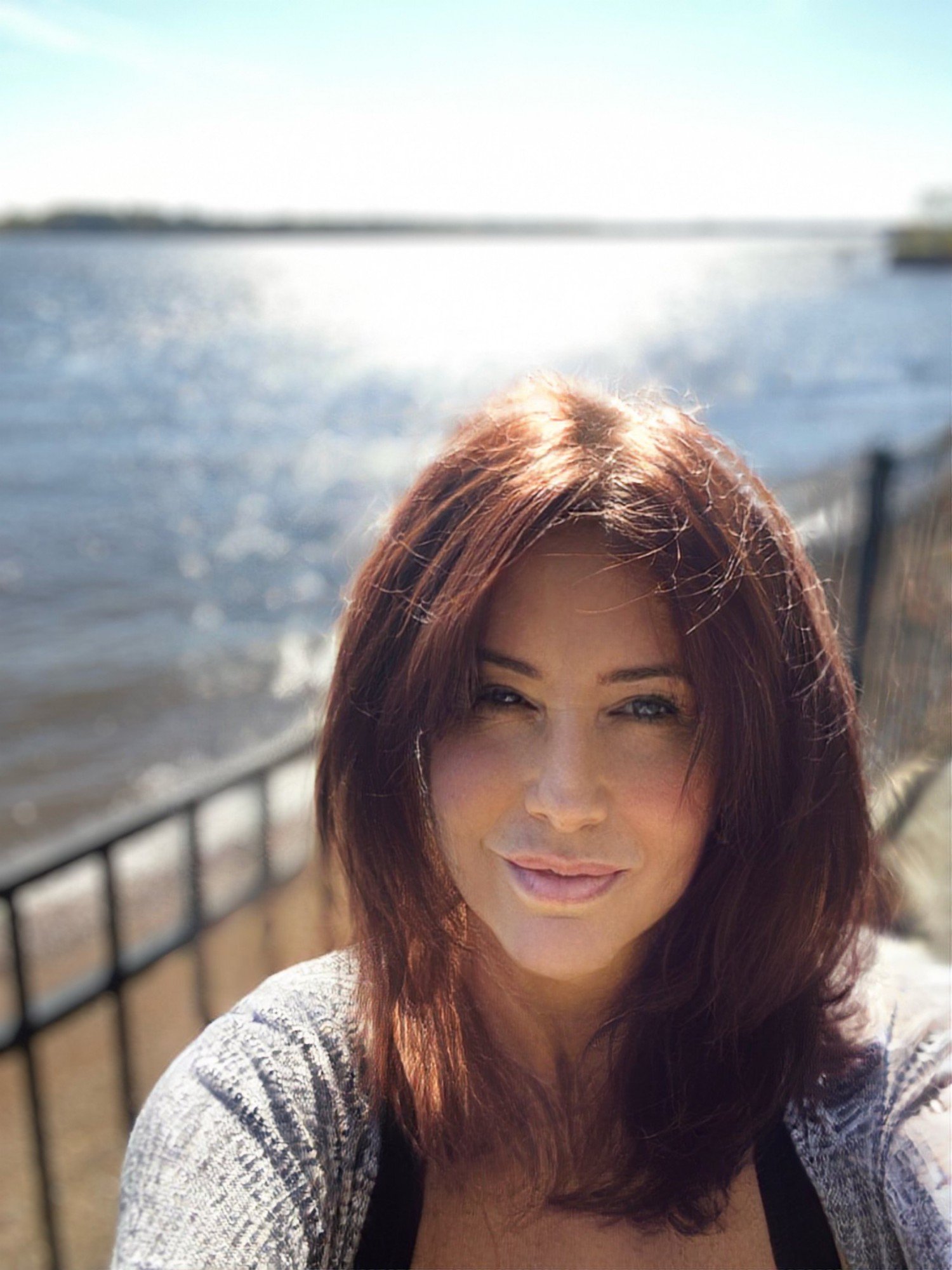
The goal was never zero sun. The goal is no burns, and enough light.
On this issueI grew up in Venezuela, in a family where sunlight and the beach were simply the rhythm of life. Our beach house, La Ciénaga, was a staple at least every other weekend and every vacation. The sun was always there.
So I was stunned the first time someone told me I had to protect myself from it. I was lying on the sand in coconut oil, feeling happier and more beautiful than anywhere else, and I was being told that the very thing making me feel that way was the enemy. It never sat right with me.
In my heart, everything natural, everything that comes from God as nature does, is good for us, and I will choose it first over any man-made option. Coating my skin in chemicals to keep the light out always felt like the wrong answer.
I have been a quiet rebel on this my whole life. I have rarely used more than a light SPF, and only in the strongest midday sun, or once I had already had my fill and wanted to stay on the beach. The sun has given me energy, joy and a glow I have never found in a bottle.
That is my story, not a prescription. Your skin, your history and where you live all matter. But the research has moved, and it now sounds far closer to the life I grew up with than to what we were told for forty years. The goal was never zero sun. The goal is no burns, and enough light.
So this issue is a thank-you: to the scientists who looked again, who measured what avoiding the sun was costing us, and who gave us back the sun, for our health and for our joy. You will meet them on page 7. Then begin with the window nearest you, and go outside.
The body holds the work. These are the tools that hold the body.
For most of our adult lives the instruction has been simple: stay out of the sun. Many of us followed it well, working under LEDs and stepping outside mostly to cross a parking lot. The science has moved since then. It has not reversed: burns still harm, and skin cancer is real. What has changed is the picture. Sunlight now looks less like a hazard to eliminate and more like a nutrient with a dose. Too little harms, too much harms, and the pattern matters most.
In 1990, researchers in southern Sweden enrolled nearly 30,000 women to study melanoma, asked in detail how each spent time in the sun, and followed them for two decades. Women who avoided the sun died at roughly twice the rate of women with the most active sun habits (Lindqvist, 2014). A second analysis found that non-smokers who avoided the sun had a life expectancy similar to smokers who sought it (Lindqvist, 2016). Most of the difference was cardiovascular, not cancer.
The finding deserves attention and caution. It is observational, in fair-skinned women in a low-light country. Women who sunbathe and travel may be wealthier and fitter; women already unwell may have stayed in. It cannot prove that sunlight caused the difference. Still, the signal has held. The same cohort later linked low sun exposure to hypertension (2021), and in 2025 an international panel of photobiologists and dermatologists concluded that sunlight's benefits belong in public health policy beside its risks (Riedmann, 2025).
Blood pressure. Your skin stores nitric oxide, a molecule that relaxes blood vessels. When researchers in Edinburgh and Southampton shone UVA on volunteers' skin, nitric oxide was released and blood pressure fell, with no role for vitamin D (Liu, 2014). Across more than 340,000 American patients, more ambient UV tracked with lower systolic pressure, even after accounting for temperature (Weller, 2020).
Your internal clock. Among roughly 89,000 UK adults who wore light sensors on their wrists for a week, those with the brightest days had markedly lower mortality over the following eight years, and those with the brightest nights had higher mortality (Windred, 2024). The same pattern appeared for type 2 diabetes, and in a 2025 analysis the link between bright nights and heart failure was stronger in women. Indoor light usually measures a few hundred lux; daylight, even under cloud, is ten to a hundred times brighter. Eight hours of sleep does not substitute for that contrast.
Mood. In a study of about 400,000 people, each additional hour spent in outdoor daylight was associated with lower odds of depression and fewer insomnia symptoms (Burns, 2021).
The light we cannot see. Glen Jeffery's laboratory at University College London has shown in small studies that deep red and near-infrared light support mitochondrial function. In people over 40, three minutes of 670 nm light in the morning improved colour vision for a week; in the afternoon it did nothing (Shinhmar, 2021). In 2025 the lab reported that infrared from sunlight passes through the human torso, even through clothing, and a 2026 study found colour discrimination declined after a week under standard LED desk lights and improved when infrared was added. One laboratory, small samples, no long-term outcomes yet: a good reason to walk outside in the morning. How much of sunlight is infrared is on page 9.
Glass blocks the UVB that makes vitamin D and admits the UVA that ages skin.
Evidence · EstablishedBelow a UV index of about 3, and for much of the year above about 40° north, UVB is too weak to make much.
Evidence · EstablishedIn the Nambour trial it did not reduce basal cell cancer, and most of us apply a quarter to half the tested amount. Shade, clothing and timing are equal partners.
Evidence · EstablishedA tan is the skin's response to DNA damage. It offers little real protection.
Evidence · EstablishedRisk is lower but not zero, and melanoma in darker skin is often caught later.
Evidence · EstablishedThere is no evidence of retinal harm, and blue-blocking lenses did not ease eye strain in a Cochrane review. The real issue is light at night.
Evidence · PromisingThe upper limit for adults is 4,000 IU a day, and very large intermittent doses may increase falls.
Evidence · Established· Lindqvist PG, et al. J Intern Med 2014;276:77–86, doi:10.1111/joim.12251 · Lindqvist PG, et al. J Intern Med 2016;280:375–87, doi:10.1111/joim.12496 · Lindqvist PG, et al. Photochem Photobiol Sci 2021;20:285–92, doi:10.1007/s43630-021-00017-x · Riedmann U, et al. Photochem Photobiol Sci 2025;24:867–93, doi:10.1007/s43630-025-00743-6 · Liu D, et al. J Invest Dermatol 2014;134:1839–46, doi:10.1038/jid.2014.27 · Weller RB, et al. J Am Heart Assoc 2020;9:e013837, doi:10.1161/JAHA.119.013837 · Windred DP, et al. PNAS 2024;121:e2405924121, doi:10.1073/pnas.2405924121 · Windred DP, et al. Lancet Reg Health Eur 2024;42:100943, doi:10.1016/j.lanepe.2024.100943 · Windred DP, et al. JAMA Netw Open 2025;8:e2539031, doi:10.1001/jamanetworkopen.2025.39031 · Burns AC, et al. J Affect Disord 2021;295:347–52, doi:10.1016/j.jad.2021.08.056 · Shinhmar H, et al. Sci Rep 2021;11:22872, doi:10.1038/s41598-021-02311-1 · Jeffery G, et al. Sci Rep 2025;15:24435, doi:10.1038/s41598-025-09785-3 · Robinson M, Barrett E, Jeffery G. PLoS One 2026;21:e0345340, doi:10.1371/journal.pone.0345340 · Green AC, et al. J Clin Oncol 2011;29:257–63, doi:10.1200/JCO.2010.28.7078 · Singh S, et al. Cochrane Database Syst Rev 2023;CD013244, doi:10.1002/14651858.CD013244.pub2 · Demay MB, et al. JCEM 2024;109:1907–47, doi:10.1210/clinem/dgae290
Vitamin D still matters. In the United States, national survey data show that only about a third of people reach the level many clinicians consider sufficient. About one in four is deficient, and women are more likely to be low than men (Cui, 2022). Globally, nearly half the population falls below 20 ng/mL (Cui, 2023).
The reasons are mostly structural. In UK studies, healthy adults received only about 3% of the UV available to them, because they were indoors (Kift, 2018). Darker skin needs considerably more exposure to make the same amount. The skin's capacity declines with age: in one study, skin from people in their late seventies made less than half the previtamin D of young skin (MacLaughlin & Holick, 1985). And body fat holds vitamin D away from circulation.
How much sun does it take? Researchers in Manchester found that about 13 minutes of midday sun on the arms and legs, three times a week, brought 90% of fair-skinned adults to an adequate level, well short of a burn. South Asian adults needed about 45 minutes, and most still fell short (Rhodes, 2010; Farrar, 2013).
What counts as “enough” is openly disputed. The long-standing medical threshold is 20 ng/mL; many labs and clinicians use 30. In 2024 the Endocrine Society withdrew its own 30 ng/mL target, saying the evidence did not define an optimal level, and advised against routine testing in healthy people (Demay, 2024). Below 12 to 20 ng/mL, everyone agrees you are low. Sun cannot overload you with vitamin D, because the skin regulates its own production. Supplements can. What the trials show about pills is in The Daily Layer, page 17.
None of this makes burning acceptable. Melanoma, the most dangerous skin cancer, is most strongly linked to intermittent, intense exposure and sunburn: the pale week at the beach and the burned shoulders. Basal and squamous cell cancers, far more common, track total lifetime UV (Gandini, 2005). People who work outdoors have lower melanoma rates than that pattern would predict, but more of the other cancers.
Sunscreen works, with limits. In a landmark trial in Nambour, Australia, daily sunscreen reduced squamous cell carcinoma; a decade later the daily users had half as many melanomas, and far fewer invasive ones (Green, 2011). The same trial showed daily sunscreen measurably slowed visible skin aging (Hughes, 2013). Chemical filters such as oxybenzone and avobenzone are absorbed into the bloodstream (Matta, 2020); the FDA classifies them as needing more data, not as unsafe. Zinc oxide and titanium dioxide remain the only filters it has proposed as safe and effective, so mineral is a reasonable choice if you prefer caution. The FDA approved a new filter this year; see HHS & MAHA Watch, page 19.
Photoaging is real, and it is mostly UVA, which passes through cloud and degrades collagen. The practical answer for women in the middle decades is to divide the body: protect what shows age, and let the rest have a little light.
Ask your clinician first if you have had skin cancer, have lupus or another light-sensitive condition, a suppressed immune system, or take photosensitizing medicines: doxycycline and other tetracyclines, fluoroquinolones, hydrochlorothiazide, amiodarone, isotretinoin or topical retinoids, some NSAIDs, or St John's wort.
This feature is education, not medical advice. Bring these questions to the person who knows your history.
· Cui A, et al. Front Nutr 2022;9:965376, doi:10.3389/fnut.2022.965376 · Cui A, et al. Front Nutr 2023;10:1070808, doi:10.3389/fnut.2023.1070808 · Kift R, et al. IJERPH 2018;15:1624, doi:10.3390/ijerph15081624 · MacLaughlin J, Holick MF. J Clin Invest 1985;76:1536–38, doi:10.1172/JCI112134 · Rhodes LE, et al. J Invest Dermatol 2010;130:1411–18, doi:10.1038/jid.2009.417 · Farrar MD, et al. Am J Clin Nutr 2013;97:1210–16, doi:10.3945/ajcn.112.052639 · Demay MB, et al. JCEM 2024;109:1907–47, doi:10.1210/clinem/dgae290 · Gandini S, et al. Eur J Cancer 2005;41:45–60, doi:10.1016/j.ejca.2004.10.016 · Green AC, et al. J Clin Oncol 2011;29:257–63, doi:10.1200/JCO.2010.28.7078 · Hughes MCB, et al. Ann Intern Med 2013;158:781–90, doi:10.7326/0003-4819-158-11-201306040-00002 · Matta MK, et al. JAMA 2020;323:256–67, doi:10.1001/jama.2019.20747
A century ago, a doctor might have prescribed you the sun. Today a doctor is more likely to warn you away from it. Both instructions came from serious people acting on real evidence. How one became the other says a great deal about how health advice is made, simplified and sold.
In 1903 the Nobel Prize in Physiology or Medicine went to a Danish physician, Niels Finsen, for treating lupus vulgaris, a disfiguring tuberculosis of the skin, with concentrated light. The Nobel committee said he had “opened a new avenue for medical science.” He died the following year.
That same year Auguste Rollier opened a clinic at Leysin, high in the Swiss Alps, treating tuberculosis of the bones and joints with carefully graded sunlight, a few more minutes at a time. Physicians came from around the world to watch, and Leysin became a town of sun terraces.
Then came rickets, the bone-bending disease of smoky industrial cities. A Berlin paediatrician cured children with an ultraviolet lamp; two New York doctors cured them with nothing more than sunshine on a hospital roof. Within a few years the active ingredient had a name, vitamin D, and irradiated and fortified milk largely ended rickets as a mass disease. By the 1920s and 1930s sunlight was public health policy, and home sunlamps were marketed widely. A 2003 history in the Journal of the American Academy of Dermatology notes that the advice of that era was “often diametrically opposed” to today's.
For centuries in Europe, pale skin marked a woman of leisure and a tan marked someone who worked the fields. Industrialisation reversed that. The poor moved indoors into factories, and the rich began to holiday in the light. It is a story often told that Coco Chanel made the tan fashionable on the Riviera; historians treat it as legend. The shift it describes was real: shorter hemlines, the Riviera season and doctors' enthusiasm all pointed the same way.
Even sunscreen began as a tanning product. In the 1940s a Miami pharmacist's lotion became Coppertone, and a Swiss chemist's glacier cream became Piz Buin. Early Coppertone bottles said “Don't be a paleface.” By the 1970s, SPF ratings had become the industry's standard measure, at first a promise to help people tan without burning, not to keep them out of the sun. Tanning beds reached America around the same time, and by the 1980s salons were a growth industry.
The warnings were never new. By the end of the nineteenth century, dermatologists had linked skin cancer to sailors and farm workers who spent their lives outdoors. What changed was scale. By the 1970s, fair-skinned people living under strong sun, above all in Australia, had the highest skin cancer rates in the world.
Australia responded first. In the early 1980s, Victoria's Anti-Cancer Council aired an animated seagull singing “Slip, Slop, Slap”: slip on a shirt, slop on sunscreen, slap on a hat. It became one of the best-known health campaigns in the country's history, and its successor programme, SunSmart, still runs today.
Dermatology added a second argument. Studies in 1986 and 1988 showed that a vitamin A–derived cream could partly reverse “photoaging,” and sun damage became a beauty problem as well as a medical one. “There is no such thing as a safe tan” became standard language.
It is tempting to read this as a plot. The record is more ordinary, and more instructive. Public health experts had sound reasons for strict advice. Simple messages change behaviour, and nuanced ones often do not. Skin cancer was common and visible, and melanoma killed young people. The benefits of sunlight were diffuse and, in the 1980s, largely unmeasured. Vitamin D seemed solved by fortified food and supplements.
Two other forces pushed the message further than the evidence required.
The first is documented. In 2007, an American Cancer Society skin cancer advertisement in women's magazines was paid for by Neutrogena, whose name did not appear on it, and public health doctors criticised its claims. Today sunscreen makers pay an annual corporate membership fee to the Skin Cancer Foundation before they can apply for its seal of recommendation. Cancer Council Australia earns royalties from its own sunscreen line. Analysts value the global sun care market at roughly $13 to $14 billion, before counting the anti-aging industry that “photoaging” helped create. None of this shows that industry wrote the guidance. It does show who had reason to keep it absolute.
The second force was the cancer curve itself. In 2021, researchers writing in the New England Journal of Medicine argued that much of the rise in melanoma reflects more screening and biopsies, not more disease, while death rates stayed roughly flat (Welch, 2021). The debate continues. Some of the alarm that justified the campaigns appears to have been produced by their own success at sending people for skin checks.
Dissent arrived early in this century and was not welcome. In 2004 the vitamin D researcher Michael Holick left his post in Boston University's dermatology department after publishing a book that advocated “sensible sun exposure.” His department chair called it an embarrassment. Holick had ties to the tanning industry, and some of his higher vitamin D targets have since been rejected, but he forced a question onto the table. Better evidence followed, the studies at the heart of “The Sun, Reconsidered,” and official language began to shift toward risks and benefits.
The warning was true. Burns, and heavy cumulative UV in fair skin, cause cancer, and the campaigns saved lives. What went wrong was the rounding off. “Do not burn” became “avoid the sun,” and dose, timing, skin type and benefit fell out of the message. Commerce sold the prevailing belief in each era, sunlamps in the 1920s and daily SPF later. Harms that could be counted outweighed benefits that had not yet been measured. The measurement has now begun.
· Greenhalgh I, Butler AR. J R Coll Physicians Edinb 2017;47:276–80 · Albert MR, Ostheimer KG. J Am Acad Dermatol 2003;48:909–18 and 49:1096–106 · Hönigsmann H. Photochem Photobiol Sci 2013;12:16–21 · Kligman AM, et al. J Am Acad Dermatol 1986;15:836–59 · Weiss JS, et al. JAMA 1988;259:527–32 · El Ghissassi F, et al. Lancet Oncol 2009;10:751–52 · Welch HG, Mazer BL, Adamson AS. N Engl J Med 2021;384:72–79
Historical and institutional records (not research)· Nobel Foundation, Physiology or Medicine 1903 · Carter S. Rise and Shine, Berg, 2007 · Segrave K. Suntanning in 20th Century America, McFarland, 2005 · Cancer Council Victoria, campaign history · Farman JC, et al. Nature 1985;315:207–10 · IARC Monographs Vol. 55 (1992) · SEER Cancer Statistics Review 1975–2015 · AAD position statement on vitamin D, 2009 · New York Times, July 10, 2007 · Skin Cancer Foundation, Seal of Recommendation · Cancer Council Australia, partnerships · Scientific American, Jan 30, 2009 · Joint UK position statement on vitamin D, Dec 16, 2010 · NICE NG34, 2016
The warning about burning did not come from villains, and the case for sunlight did not come from sunbathers. It came slowly, from researchers in different fields who kept finding the same uncomfortable signal in their data: people who got too little sun seemed to pay for it. Not one of them told us to tan. Each gave back a piece of the sun.
His lab showed in 1985 that ageing skin makes far less vitamin D (page 4). In 2007 his review “Vitamin D deficiency” in the New England Journal of Medicine made the condition a mainstream clinical conversation. The honest note: his tanning-industry ties and contested targets are on page 6. Read him as the man who reopened the question, not the final word.
MacLaughlin & Holick, J Clin Invest 1985 · Holick, N Engl J Med 2007Working on the World Health Organization's global burden of disease, her team estimated that UV exposure costs the world about 1.6 million healthy life-years a year, while cutting exposure to very low levels could cost about 3.3 billion through the bone diseases of vitamin D deficiency. In 2011 her Australian study linked more sun, and separately higher vitamin D, with a lower risk of a first sign of multiple sclerosis.
Lucas et al., Int J Epidemiol 2008 · Lucas et al., Neurology 2011Her 2011 review in Nature Reviews Immunology asked whether sunlight calms the immune system only through vitamin D, and set out the evidence that other signals UV triggers in the skin may matter as much, in psoriasis, multiple sclerosis and asthma. It moved the question from “which pill?” to “what else does the light do?”
Hart, Gorman & Finlay-Jones, Nat Rev Immunol 2011The Melanoma in Southern Sweden cohort was built to study skin cancer. Lindqvist turned it around and asked what avoiding the sun did to everything else. His finding, mostly cardiovascular, is on page 3. His team put the share of deaths attributable to sun avoidance at about 3%: observational data, in fair-skinned women, in a low-light country.
Lindqvist et al., J Intern Med 2014 and 2016A dermatologist making the case for sunlight: his group showed that UVA releases nitric oxide stored in the skin and lowers blood pressure without any help from vitamin D (page 3). He was senior author of the 2025 expert report, also on page 3, that asked for public-health advice to weigh sunlight's benefits beside its harms.
Liu et al., J Invest Dermatol 2014 · Weller et al., J Am Heart Assoc 2020 · Riedmann et al., Photochem Photobiol Sci 2025She led the revised Australian position statement on balancing the risks and benefits of sun exposure, published in 2024 by a group that included Robyn Lucas and Manchester's Ann Webb. In the country with the world's most famous sun-safety campaign, it said plainly that the balance is not the same for everybody. What it recommends is overleaf.
Neale et al., Aust N Z J Public Health 2024· MacLaughlin J, Holick MF. J Clin Invest 1985;76:1536–38, doi:10.1172/JCI112134 · Holick MF. Vitamin D deficiency. N Engl J Med 2007;357:266–81, doi:10.1056/NEJMra070553 · Lucas RM, McMichael AJ, Armstrong BK, Smith WT. Int J Epidemiol 2008;37:654–67, doi:10.1093/ije/dyn017 · Lucas RM, Ponsonby AL, Dear K, et al. Neurology 2011;76:540–48, doi:10.1212/WNL.0b013e31820af93d · Hart PH, Gorman S, Finlay-Jones JJ. Nat Rev Immunol 2011;11:584–96, doi:10.1038/nri3045 · Lindqvist PG, et al. J Intern Med 2014;276:77–86, doi:10.1111/joim.12251 · Liu D, et al. J Invest Dermatol 2014;134:1839–46, doi:10.1038/jid.2014.27 · Riedmann U, et al. Photochem Photobiol Sci 2025;24:867–93, doi:10.1007/s43630-025-00743-6 · Neale RE, et al. Aust N Z J Public Health 2024;48:100117, doi:10.1016/j.anzjph.2023.100117
Written for Australia's strong sun. Where the UV is weaker, as in most of the US and Europe for much of the year, ask your clinician how it applies to you, especially after menopause.
Forty years of measurement
Sources as on page 7, chiefly Neale RE, et al. Balancing the risks and benefits of sun exposure: a revised position statement for Australian adults. Aust N Z J Public Health 2024;48:100117. doi:10.1016/j.anzjph.2023.100117. This page is education, not medical advice.
If you work indoors, live far from the equator, or simply can't get much sun, red light therapy offers a concentrated slice of what sunlight carries: the deep red and the invisible near-infrared just beyond it, with no ultraviolet at all. That is its strength and its limit. Think of it as a complement, never a replacement.
In 1967, Endre Mester at Semmelweis University in Budapest shone a low-power ruby laser on shaved mice, expecting to test for harm. The treated mice regrew hair faster. He called it laser biostimulation.
In the 1990s, NASA-funded work on LED grow lights for space led to studies of red LEDs for wound healing. In 2015 the field settled on its name: photobiomodulation.
Light at these wavelengths is absorbed in the mitochondria, the cell's power plants, and helps them make more ATP, the cell's energy currency. The scientist who mapped the mechanism is on page 11.
Wavelength decides depth. Red at about 630–660 nm is absorbed largely in the skin. Near-infrared at about 810–850 nm travels deeper, toward muscle and joint.
It makes no vitamin D. Only UVB, around 290–315 nm, does that, and a red panel has none.
It does not set your clock. The body's clock reads bright, broad daylight through the eyes, thousands of lux of it. A red panel offers neither that brightness nor that spectrum. Go outside in the morning, then use the panel.
| Sunlight | A red light panel | |
|---|---|---|
| Ultraviolet | Yes: UVB and UVA, with burn and skin cancer risk | None |
| Vitamin D | Yes, from UVB when the sun is high enough | No |
| Clock-setting light | Very bright and broad, even under cloud | No meaningful signal |
| Red and near-infrared | Plentiful, but diffuse | Concentrated in two or three narrow bands |
| Dose control | Varies with sky, season, latitude and hour | Fixed: distance and minutes |
| Cost | Free | A device, from a few hundred dollars |

Not quite bottled sunlight. A precise piece of it.
For the woman who cannot get much sun, red light can deliver one useful part of the spectrum on a schedule. What it can do is graded on page 10; how to buy a device that works is on page 12.
· Anders JJ, Lanzafame RJ, Arany PR. Low-level light/laser therapy versus photobiomodulation therapy. Photomed Laser Surg. 2015;33(4):183–184. doi:10.1089/pho.2015.9848 · Hamblin MR. Photochem Photobiol. 2018;94(2):199–212. doi:10.1111/php.12864
Historical records (not research): Mester E, Szende B, Tota JG. Kiserl Orvostud. 1967;19:628–631 · NASA Spinoff 2005, “Health and Medicine” · Solar spectral irradiance at the surface: standard reference values
Red light therapy has travelled from physics labs and dermatology clinics into bathrooms and gyms in a single decade. The research is real, uneven and often small, and much of it was done with clinical devices rather than home panels. Here is where it stands for women between 38 and 58.
Twenty-two placebo-controlled trials, 1,063 patients, showed meaningful relief at recommended doses. Those trials used clinicians' lasers at defined points, not home panels.
Stausholm et al., BMJ Open 2019A meta-analysis of 38 studies and about 3,100 patients, most with pattern hair loss, found hair density rose against placebo over 4 to 26 weeks. The studies varied widely. Choose a device FDA-cleared for women.
Perez et al., Dermatol Surg 2025A little light stimulates tissue; much more can undo the benefit. That is why a longer session is not a better one.
Huang et al., Dose Response 2009In a controlled German trial of 136 adults, 30 sessions smoothed skin and raised collagen density on ultrasound. Modest and gradual; the split-face trial is on page 16.
Wunsch & Matuschka 2014The Valeda system is used in the eye doctor's office. At two years, 6.8% of treated eyes progressed to atrophy against 24.0% on sham, in one company-funded trial of 148 eyes. Never improvise this with a home panel.
Jaffe et al., Retina 2026Small gains in performance and recovery, mostly in young athletes treated before exercise. Five small sleep trials, 240 people in all, suggest a modest improvement, with wide uncertainty.
Leal-Junior 2015 · Vital de Azevedo 2026No home-panel evidence of meaningful fat loss. Walk past the before-and-after photos.
No adequate trials foundClaims about raising hormones or detoxifying the body have no reliable human support.
No adequate trials foundNeither. A panel has no UVB and no clock-setting brightness; page 9 explains why.
Physics and physiologyThe cell mechanism is real; a felt, whole-body lift in energy, or a longer life, has not been shown.
Mechanism only· Wunsch A, Matuschka K. Photomed Laser Surg. 2014;32(2):93–100. doi:10.1089/pho.2013.3616 · Perez SM, et al. Dermatol Surg. 2025;51(2):179–183. doi:10.1097/DSS.0000000000004442 · Stausholm MB, et al. BMJ Open. 2019;9(10):e031142. doi:10.1136/bmjopen-2019-031142 · Jaffe GJ, et al. Retina. 2026;46(5):783–795. doi:10.1097/IAE.0000000000004822 · Leal-Junior ECP, et al. Lasers Med Sci. 2015;30(2):925–939. doi:10.1007/s10103-013-1465-4 · Vital de Azevedo WM, et al. Lasers Med Sci. 2026;41(1). doi:10.1007/s10103-026-04913-5 · Huang YY, Chen AC, Carroll JD, Hamblin MR. Dose Response. 2009;7(4):358–383. doi:10.2203/dose-response.09-027.Hamblin
Light, measured
Dr. Michael R. Hamblin
A scientist's career, measured in wavelengths and joules.
Each issue, one person who has lived the pillar in full. For red light, the most rigorous name in the field.
Michael Hamblin trained in England as a synthetic organic chemist, earning his doctorate at Trent University. He found his life's subject in Boston, as a principal investigator at the Wellman Center for Photomedicine at Massachusetts General Hospital, and taught dermatology at Harvard Medical School, where he is now an associate professor emeritus.
His work ran on two tracks: light that destroys, in photodynamic therapy for infections and cancer, and light that restores, the field now called photobiomodulation. Few scientists have done more to move red light from fringe claim to measurable biology. He is now a Distinguished Visiting Professor at the University of Johannesburg's Laser Research Centre.
The Trove promises research before recommendation. Dr. Hamblin spent decades on exactly that: measuring what light does, at what dose, and in which cells. His work is why we can grade red light at all.
If you take one thing from him, take the curve. With any device, follow the maker's time and distance, use it consistently and briefly, then step away.
Search “red light therapy” and you will find a mask for about $39 and a panel for about $4,000, at time of writing. Both promise collagen, recovery and glow. Nothing on the page tells you which one works. That confusion is not your fault: most devices are sold as general wellness products, so no one checks their numbers before they reach your cart. A real device can prove itself, and once you know what to ask for, the field narrows quickly.
Once the wavelengths are right, the next question is power. Irradiance, written in milliwatts per square centimetre (mW/cm²), tells you how much light actually reaches your skin. Multiply it by time and you have the dose.
Here is the problem. Many brands measure with an inexpensive solar power meter, a tool built for sunlight. It is not calibrated for the narrow bands an LED panel emits, and it tends to over-report them. Brands also measure at zero inches, quote the brightest hotspot instead of the average, or test a cold panel before it settles. Each habit inflates the figure.
The honest tool is a spectroradiometer, ideally used by an accredited independent lab at a stated distance. The few brands that publish both kinds of number show the gap plainly: the lab average is often a fraction of the figure on the box.
That is not a scandal. It is useful information. A good panel, honestly measured, delivers roughly 40 to 60 mW/cm² at six inches, and that is enough: at that strength a five- to ten-minute session reaches the doses used in skin research. More is not better, because light works on a curve (page 11). Ask how a number was measured, at what distance, and whether a lab report exists.
Face masks are the simplest daily habit and the category with the most FDA clearances; their fixed distance means a predictable dose. Hair caps belong in their own category; choose one cleared for women. Small panels suit the face, neck or a single joint, and travel well. Half- and full-body panels cover more of you in one session. That is what the extra money buys. It does not buy different biology.
· FDA 510(k) premarket notification database (record, not research) · Wunsch A, Matuschka K. Photomed Laser Surg. 2014;32(2):93–100 · Huang YY, Chen AC, Carroll JD, Hamblin MR. Biphasic dose response in low level light therapy. Dose Response. 2009;7(4):358–383. doi:10.2203/dose-response.09-027.Hamblin
Mostly unverified marketplace panels and small handhelds. Some are fine; you simply can't tell which.
Reputable small panels, FDA-cleared masks and handhelds, and two- to three-year warranties.
Half- to near-full-body panels from established brands. Fewer sessions to cover more of you.
Full-body arrays, premium names, and the rare panel cleared by the FDA for several uses.
At every tier, look for a real company behind the product: a support address, a published manual and a warranty you can read before you pay.
This guide is for education and is not medical advice. Red light devices are not intended to diagnose, treat, cure or prevent any disease unless they are FDA-cleared for a stated use.
Every product we feature has been researched, not personally tested. We feature only products in categories with credible published research behind them, from makers who share real specifications, and we tell you where the evidence is strong and where it is still thin. That research describes the practice or the technology; it does not mean a specific product has been clinically proven unless we say so and cite the study.
Disclosure: links marked “Affiliate link” earn The Trove a commission if you buy, at no extra cost to you. Links marked “Direct, no commission” earn nothing. Prices as listed on October 11, 2026; check before you buy.
660 nm red and 850 nm near-infrared, switchable, with a 3-year warranty and a 60-day trial listed by the retailer. Worth knowing: the 73 mW/cm² at six inches is the brand's own figure, with no lab report. Read it as a ceiling (page 12).
About $229 at Topture, October 2026 Explore at Topture → Affiliate link · we may earn a commissionThe same two wavelengths over a larger area, with the same 3-year warranty and 60-day trial listed by the retailer. Worth knowing: ask for an independent irradiance report before you buy.
About $599 at Topture, October 2026 Explore at Topture → Affiliate link · we may earn a commissionA 36-inch panel covering most of the body at 6 to 18 inches, 660/850 nm, 3-year warranty. Worth knowing: the brand quotes about 189 mW/cm² at six inches without a lab method, close to our “be skeptical” line. More coverage, not different biology.
About $1,199 at Topture, October 2026 Explore at Topture → Affiliate link · we may earn a commission630 nm red and 830 nm near-infrared, the pairing used in the split-face trial on page 16, at a fixed distance, with a 120-day money-back guarantee. The maker describes it as FDA-cleared; check the stated use before you buy.
About $349 at HigherDOSE, October 2026 Explore HigherDOSE → Affiliate link · we may earn a commission650 nm red, worn for ten minutes a day. The research on page 10 measured change over months, so judge it at 16 weeks, not two. Worth knowing: the brand's own hair figures come from a survey of 28 users.
About $449 at HigherDOSE, October 2026 Explore HigherDOSE → Affiliate link · we may earn a commissionIncluded because it is one of the few brands to publish accredited-lab averages at a stated distance. Use its reports as the yardstick when you question any other panel's numbers.
Several sizes; check current pricing See Mito Red Light → Direct, no commissionUnbranded marketplace panels with impossible numbers. “1000W,” “2000 mW/cm²,” no wavelength graph, no stated distance, no ETL or UL listing, no US support. Their claims can't be checked, and a dead near-infrared chip is invisible to you.
“Red light mats” that list no LED wavelengths. The word covers infrared heat mats and PEMF mats that emit no light at all. Buy them for heat if you like, but not as red light therapy.
The clock in your brain sets itself by light: a strong signal early, a clear absence of it late. Before electric light, people lived in daylight above 300 lux or near-darkness below 30; today we live in the murky middle, and ordinary indoor evening light is enough to suppress melatonin in many people (Phillips, 2019).
Ten to thirty minutes of daylight, longer when it is cloudy. No sunglasses for this and no window glass.
Work near a window, take calls outdoors, walk after lunch.
Overhead lights off, lamps low and warm. Amber and red barely register with the clock; blue-white does.
Night mode, lowest brightness, or amber evening glasses if you love to read on a tablet.
Blackout curtains or a sleep mask, chargers covered, a dim red nightlight for the hallway.
After a week of only natural light, campers' internal night began at sunset and ended just after sunrise.
Colorado researchers took volunteers camping with no electric light at all. Their body clocks moved earlier and locked to the sun, and the late risers shifted most (Wright, 2013). For women in midlife there is a second reason to be generous with morning light: the eye's lens yellows and the pupil narrows with age, and by 45 we receive roughly half the clock-setting light of early youth (Turner & Mainster, 2008).
Free, and the most powerful tool on this page. A coffee on the step counts.
A bedside light that brightens before your alarm. It eases waking; it does not replace going outside. Lumie and Hatch both make one.
A complement for the woman who cannot get much sun, never a substitute for the doorstep.
See The Trove's Picks, page 14 →· Phillips AJK, et al. PNAS. 2019;116(24):12019–12024. doi:10.1073/pnas.1901824116 · Wright KP Jr, et al. Curr Biol. 2013;23(16):1554–1558. doi:10.1016/j.cub.2013.06.039 · Turner PL, Mainster MA. Br J Ophthalmol. 2008;92(11):1439–1444. doi:10.1136/bjo.2008.141747
In a Korean split-face study, adults with wrinkles had half the face treated with LED light, 633 nm red, 830 nm near-infrared or both, twice a week for four weeks, against a sham light. Biopsies showed more collagen and elastic fibres, and measured wrinkles and elasticity improved on the treated side (Lee, 2007). The changes built gradually over the weeks of treatment.
A mask is close, even and effortless; a panel treats face, neck and chest at once. Neither works if it lives in a drawer. Choose the one you will use.
Visible light can deepen pigment. In skin types IV to VI, it produced darker and longer-lasting pigmentation than long-wave UVA, while fair skin showed none (Mahmoud, 2010). If you have melasma or deeper skin, begin gently and speak with your dermatologist before facial light, and choose a tinted mineral sunscreen with iron oxides, which filter visible light.
Red light as a stand-in for sunscreen, or as a way to “build a base” before sun. It does neither. Red light supports repair; daily broad-spectrum protection prevents the damage in the first place. Keep both.
630 and 830 nm, close to the trial above; details on page 14. A long-established alternative: Omnilux Contour Face, about $395 (direct, no commission).
Explore HigherDOSE · affiliate link →One device for face, neck, chest and body. Stand at the distance the maker specifies, goggles on.
See The Trove's Picks →Cleanse, and skip retinoids and acids before the session. Goggles on. Light for the time the maker sets. Then serum, moisturizer and, in the morning, a tinted mineral sunscreen.
Neither works if it lives in a drawer.
Choose the one you will use.Mask or panel · the only rule that matters
· Lee SY, Park KH, Choi JW, et al. A prospective, randomized, placebo-controlled, double-blinded, and split-face clinical study on LED phototherapy for skin rejuvenation. J Photochem Photobiol B. 2007;88(1):51–67. doi:10.1016/j.jphotobiol.2007.04.008 · Mahmoud BH, Ruvolo E, Hexsel CL, et al. Impact of long-wavelength UVA and visible light on melanocompetent skin. J Invest Dermatol. 2010;130(8):2092–2097. doi:10.1038/jid.2010.95
Vitamin D3, cholecalciferol, is the form your skin makes from UVB and the form most trials use. Taken daily, it reliably raises blood levels. What it does next depends on where you start, which is why the honest answer to “should I take it?” is “test, don't guess.”
K2, menaquinone, helps activate the proteins that bind calcium into bone. In a three-year trial of 244 healthy postmenopausal women, 180 mcg a day of the MK-7 form slowed the age-related loss of bone density at the spine and femoral neck, though not at the total hip (Knapen, 2013). Other K2 trials are mixed. A sensible pairing, not a proven one.
Ask about a 25(OH)D blood test if you are indoors most days, have deeper skin, a higher body weight or low bone density. The questions are on page 4.
What to look forA modest daily dose rather than large weekly or monthly ones, chosen with your clinician, and third-party testing (USP or NSF). K2 can interfere with warfarin and similar blood thinners.
No brand link here: we have no approved supplement partner, so this is guidance only.
These statements have not been evaluated by the Food and Drug Administration. This product is not intended to diagnose, treat, cure, or prevent any disease. Ask your clinician before starting if you are pregnant or take prescription medicines. Sources: Hahn J, et al. BMJ 2022;376:e066452 · LeBoff MS, et al. N Engl J Med 2022;387:299–309 · Okereke OI, et al. JAMA 2020;324:471–80 · Neale RE, et al. Lancet Diabetes Endocrinol 2022;10:120–28 · Bischoff-Ferrari HA, et al. JAMA 2020;324:1855–68 · Knapen MHJ, et al. Osteoporos Int 2013;24:2499–507, doi:10.1007/s00198-013-2325-6
Every plant is sunlight made edible. A leaf turns light into sugar, and to survive that same sun it makes its own protection: carotenoids such as lycopene, beta-carotene, lutein and zeaxanthin, and polyphenols such as the flavonoids. Eaten, those pigments become part of us. Lutein and zeaxanthin gather in the macula as its pigment. In the AREDS2 trial, supplements of the two did not change the need for cataract surgery overall, but people who ate the least of them were about a third less likely to need it (Chew, 2013). In a small trial, women who ate tomato paste with olive oil daily for twelve weeks reddened less under UV (Rizwan, 2011). Emerging evidence, and food, not sunscreen.
Animals store sunlight too. Vitamin D is rare in food; fatty fish, egg yolks and liver are among the few natural sources. Hens kept outdoors laid eggs with three to four times the vitamin D in the yolk of hens kept inside, though supermarket free-range eggs in the same study were low, so the label is no guarantee (Kühn, 2014). Mushrooms exposed to UV make vitamin D2, and in a small trial they raised blood levels as well as a D2 supplement (Urbain, 2011).
The 2025–2030 Dietary Guidelines, at realfood.gov, rebuilt the pyramid around protein and whole, minimally processed food. Read in this light, the line that matters is not plant against animal. It is real food, in all its forms, against the ultra-processed. Food alone rarely corrects a low vitamin D level; the test, above, still comes first.
Sources: AREDS2 Research Group (Chew EY, et al.). JAMA Ophthalmol 2013;131(7):843–50, doi:10.1001/jamaophthalmol.2013.4412 · Rizwan M, et al. Br J Dermatol 2011;164(1):154–62, doi:10.1111/j.1365-2133.2010.10057.x · Kühn J, et al. Nutrition 2014;30(4):481–4, doi:10.1016/j.nut.2013.10.002 · Urbain P, et al. Eur J Clin Nutr 2011;65(8):965–71, doi:10.1038/ejcn.2011.53 · NIH Office of Dietary Supplements, Vitamin D fact sheet · USDA & HHS, Dietary Guidelines for Americans 2025–2030, realfood.gov. The policy story is in HHS & MAHA Watch, page 19.

Spirit · the fifth pillar,
present in the third
Long before anyone measured a wavelength, people understood light as more than illumination. I come to these traditions as a guest, with respect, and make no claims about what they do for the body.
The Gayatri at daybreakIn the Hindu tradition, the Gayatri mantra from the Rig Veda is addressed to Savitr, the divine light of the sun, and is traditionally recited at the junctures of the day, above all at dawn. It is a prayer that the light might illumine the mind. Many still greet the morning with it, facing east.
Lauds, the hour of praiseIn Christian monasteries, the Liturgy of the Hours marks the day with prayer. Lauds is sung at daybreak, and its themes are the rising sun and the coming of light after night. For centuries, communities have begun their work by first turning toward the morning.
The Inner Light and the lampThe Quakers speak of the Inner Light, "that of God in every one," and gather in silence to wait upon it. And in homes across South Asia during Diwali, rows of small oil lamps are lit to honour the victory of light over darkness. In each, the outer flame points to an inner one.
The thread is the same. Light is a gift to be received with attention, and the dark is part of the gift, the place where rest and renewal happen.
The practice · this weekWhen you step outside for your morning light, stand still for three breaths before you do anything else. Turn your face toward the brightest part of the sky, eyes softly open, never at the sun itself. Name one thing you are grateful for. Then begin your day. In the evening, light one candle before the screens go dark, and let it be the last light you look at.
Three breaths. One thing you are grateful for.
One candle at night.Dawn and dusk · First Light
Our standing policy page on the Department of Health and Human Services under Secretary Robert F. Kennedy Jr.: what is final and what is only proposed, critics beside champions, and no product links, ever. In a Light issue, the lead story is fittingly about the sun.
FDA added bemotrizinol, a broad-spectrum UV filter long used in Europe and Asia, to the list of ingredients allowed in over-the-counter sunscreens. It is generally recognized as safe and effective at up to 6%, for adults and children from six months. It is also the first ingredient added through the faster process created by the 2020 CARES Act. Lotions and pump sprays are allowed; propellant aerosols and powders are not, because the stability data were judged insufficient. The maker, DSM, holds 18 months of exclusivity.
Why it matters: American sunscreen makers gain their first new filter in a generation. The limits: aerosols were excluded, and several other filters used abroad still have no public timeline, as tracked by dermatologist Dr. Jane Yoo. What it means for you: new formulas will reach shelves gradually. For skin that sees the sun, broad-spectrum protection is still the daily baseline.
Policy moves fast. Status reflects September 30, 2026; items after that date are marked; we update online. Primary sources: fda.gov, hhs.gov, regulations.gov, congress.gov.
trove (n.) — a hidden collection of treasures;
rare discoveries gathered over time because of their value, power, and importance.
The Trove arrives free, every issue.
Subscribe to The Trove, free →The body holds the work. These are the tools that hold the body.
Subscribe free and get The Honest Grades: 12 wellness trends, each graded Established, Promising or Wait. Then one issue a month, the research read honestly, before it goes public.
No spam. Unsubscribe anytime. How we treat your inbox · Privacy Policy · Terms.